
The Enduring Appeal of Natural Stone
Indian Sandstone continues to be a staple across British construction sites, gardens, and heritage restorations. Its presence in historic builds is well-documented, where generations of architects have relied on its integrity and tactile quality. From the stately homes of the Cotswolds to urban conservation areas, natural sandstone has stood the test of time not just in durability, but in aesthetic relevance.
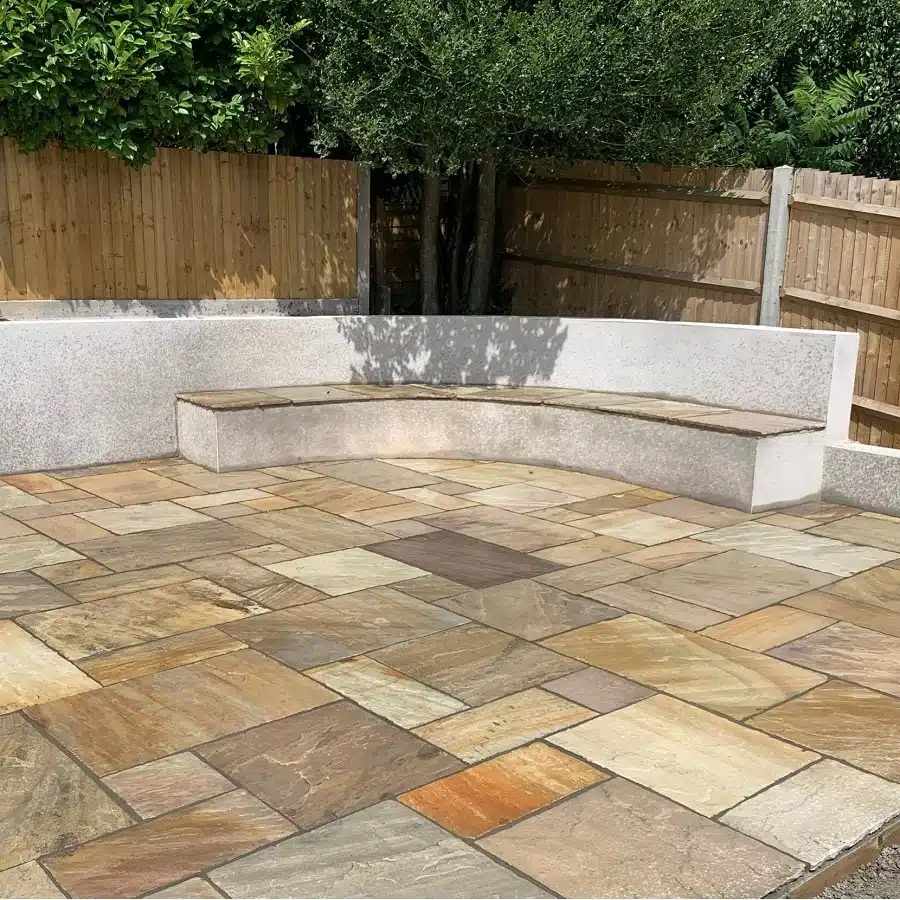
The inherent variation in tone, texture, and fossil markings adds authenticity to each slab, making the final installation feel more embedded in its environment. No two installations look the same, which appeals to designers focused on adding visual interest without relying on synthetic finishes.
When compared to alternatives like concrete paving or ceramic tiles, Indian Sandstone brings a warmth and authenticity that’s difficult to replicate. It offers natural drainage benefits, and its non-uniformity lends a softer, more natural transition between built and landscaped environments.
A Material That Balances Beauty and Function
For architects, the ability to specify a material that offers visual flexibility is key. Indian Sandstone comes in a variety of finishes from hand-cut riven to sawn and honed allowing it to fit effortlessly into both period properties and new developments. This versatility makes it a strong choice for projects where continuity across indoor and outdoor areas is important.
From a practical standpoint, its ability to withstand frost, rain, and heavy footfall gives it a distinct advantage. Properly laid sandstone with an adequate sub-base remains structurally sound for years, even in high-traffic public spaces. It resists rapid weathering, yet weathers gracefully when left untreated, often looking better with age.
The material also works well in both residential and commercial landscapes, offering a consistent surface while avoiding the uniformity often seen in mass-produced alternatives. This balance of utility and natural charm is exactly why it remains so popular among construction professionals.
Kandla Grey Indian Sandstone: A Trade Favourite
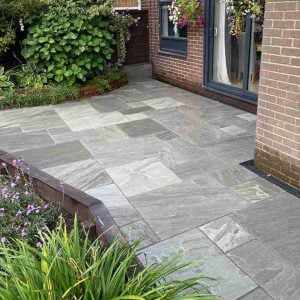
Among the many variations available, Kandla Grey Indian Sandstone has become a top choice for landscape architects and contractors alike. Its neutral grey tones pair well with modern cladding, steel features, and minimalist garden schemes. The riven finish adds depth and slip resistance without overpowering the visual balance of a space.
Large projects particularly those involving communal courtyards, driveways, or expansive terraces benefit from the subtle uniformity of Kandla Grey. The slabs maintain consistency in tone while still showing natural variation, which helps achieve a sleek finish without the sterile look of manufactured materials.
Availability also plays a role. Suppliers tend to keep healthy stock levels of Kandla Grey, making it a dependable option for time-sensitive builds. Its popularity means architects can specify it with confidence, knowing it will be readily sourced in the sizes and finishes required.
Installation and Long-Term Maintenance
Indian Sandstone offers practical advantages during the installation process. It’s relatively easy to cut, shape, and lay, particularly compared to harder stones like granite. For builds that require intricate layouts or tight curves, this workability helps reduce labour time and costs.
When sealed correctly, the stone becomes more resistant to staining from leaf fall, barbecue grease, or algae. However, many professionals choose to leave it unsealed to allow the stone to develop a natural patina. Both approaches are valid, depending on the project’s goals and surrounding environment.
Over the years, Indian Sandstone matures rather than degrades. Unlike some concrete products that fade or disintegrate, this stone maintains its structure while adopting a weathered appearance that suits older properties and naturalised settings. This longevity supports sustainable practices by reducing the need for early replacements or constant touch-ups.
Meeting Client Expectations Without Compromise
Cost-effectiveness is often a deciding factor for developers and builders, and Indian Sandstone presents strong value. It delivers a premium look without excessive expense, especially when sourced in bulk for large-scale installations. Trade discounts and consistent supply make it even more appealing to those managing tight margins.
Clients also increasingly prioritise responsible sourcing, and suppliers have responded with options that meet ethical standards. Many quarries now operate under guidelines that support fair labour and environmental management. Choosing suppliers that provide clear provenance supports this demand and enhances a project’s credibility.
From a design and construction perspective, Indian Sandstone provides predictability. Its standardised slab sizes, tonal consistency in popular variants like Kandla Grey, and ease of handling allow professionals to work efficiently. That reliability extends to the completed project, where the material performs consistently across outdoor paths, patios, retaining walls, and even internal floor sections.
Architects and builders choose Indian Sandstone not just for how it looks at installation, but for how it performs over time adapting to its setting, standing up to the weather, and continuing to add value long after completion.


Write a comment ...